
Class newsletters, notices for parents, municipal bulletins. Illustrations are used constantly in these documents, but being non-commercial does not mean anything goes. Here are the points that trip people up, in the order worth checking them.
The exception for lessons does not extend to newsletters
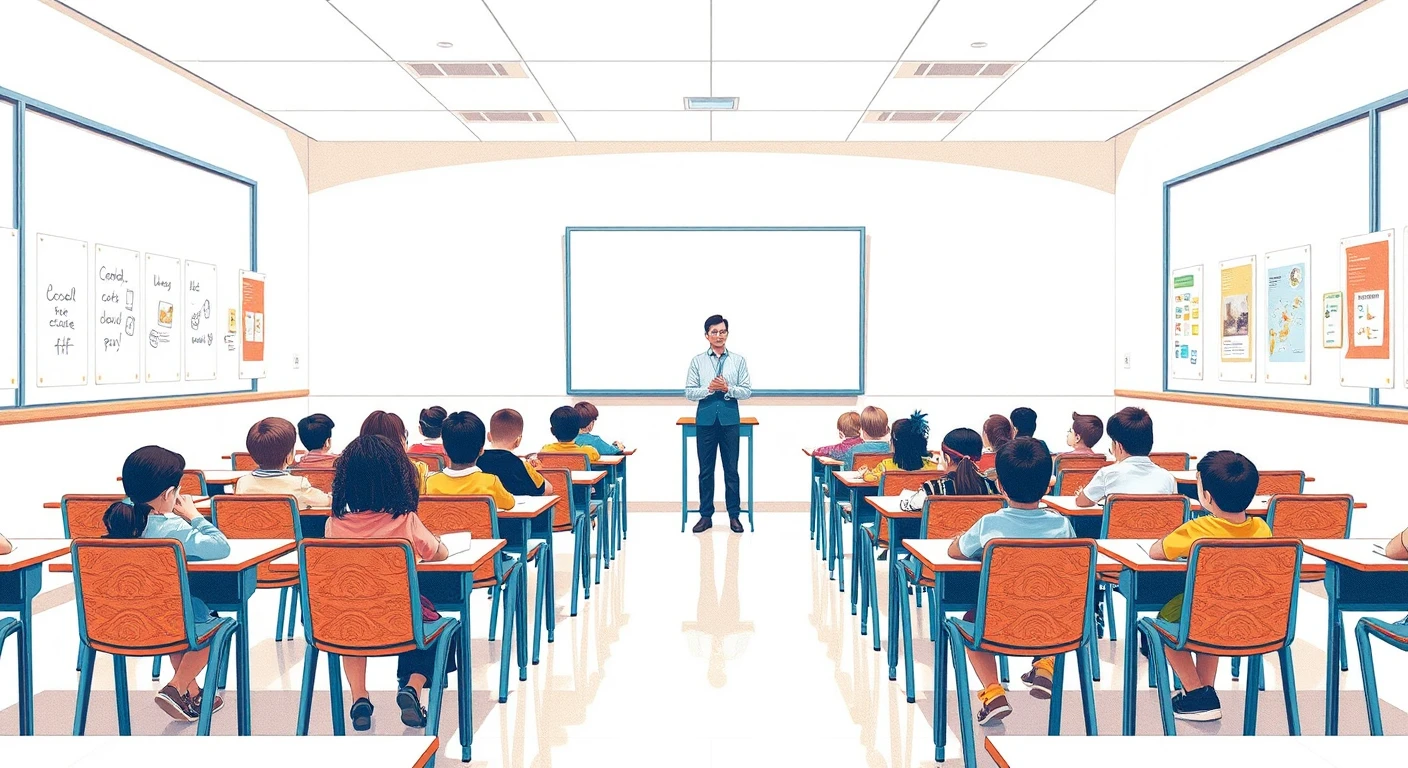
Article 35 of Japan's Copyright Act allows copyrighted works to be copied without permission, but only to the extent needed in the course of lessons at schools and similar institutions. This is Japanese law, and other countries have different rules. It is also an exception for "lessons" only. The operating guidelines compiled by education bodies and rights-holder organisations describe a "lesson" as educational activity that teachers carry out for learners under the school's responsibility and control, and give parents' meetings and courses organised by the PTA as examples of things that are not lessons.
Newsletters handed to parents and bulletins distributed to residents are safest treated as distributed material, separate from lessons. For each asset you use, check that the terms of the site it comes from allow it.
"It is non-commercial, so it is fine" does not follow
Copyright law contains exceptions for non-profit, no-fee performances and similar uses, but they do not permit every reproduction of an image into a handout. Even for material issued by a school or a local authority, the asset site's terms of use still apply.
On the other hand, many free asset sites explicitly permit school and public sector use. Reading the terms settles the question, so it is worth doing once before you start.
Check that print use is permitted
Some sites permit web use but treat print separately. Newsletters and bulletins are printed and handed out, so this needs particular care. If the terms only mention "use on websites", print may not have been considered.
Watch for limits on print runs and distribution
Some sites cap the number of copies. School-wide or authority-wide distribution tends to reach large numbers, so it is worth checking whether a limit exists. If one is stated and you expect to exceed it, either find another site or ask them directly.
Check the resolution and black-and-white printing
An image that looks fine on screen can look coarse in print. If it will occupy roughly a quarter of the page, aiming for 1000 pixels or more avoids most problems.
In material printed in black and white, a picture chosen in colour can turn into a grey mass. Which kinds of picture break down easily is shown in “Illustrations in class newsletters: deciding size and placement”, with the same pictures set side by side in black and white.
Avoid anything that points to a specific person or organisation
Because these documents are distributed widely, it is safer to avoid depictions that call a particular pupil, parent or member of staff to mind. Hairstyles, body shapes and personal items that happen to match a real person can be read as pointing at them without anyone intending it. Choose generic illustrations that do not single anyone out.
For events and safety, check the actions drawn as well
In notices about evacuation drills or cooking lessons, the illustration is read as a model of "this is how to do it". How to check this is covered in “Choosing evacuation drill illustrations by the actions they show” and “Is the picture on your cooking class worksheet a good model for getting ready?”.
How Visual Hub handles this
Our terms explicitly permit use in printed materials such as flyers and posters, and no attribution is required. For the full conditions, including the number of copies distributed, see the Terms of Use.
Sources
- Forum on Educational Use of Copyrighted Works: Operating Guidelines for Article 35 of the Revised Copyright Act, on the website of SARTRAS (Society for the Administration of Remuneration for Public Transmission for School Lessons) (in Japanese)
Information as of September 2026, when this article was written.