
The illustration on an evacuation drill notice is read as a model, not as decoration. Children who skip the text still look at the picture. So if the action it shows differs from the action the school teaches, the picture is what stays with them. Here is how to choose by the action depicted rather than by the mood.
In an earthquake: get to a spot where nothing will fall, topple or slide
The guide for writing school disaster manuals (earthquakes and tsunamis) published by Japan's Ministry of Education, Culture, Sports, Science and Technology (MEXT) gives the basic action when an earthquake strikes as moving quickly to a spot where nothing will fall from above, nothing will topple over from the side, and nothing will slide towards you. It also calls for repeated drills so that children can judge for themselves and move without waiting for a teacher's instructions.
It gives three examples, by location:
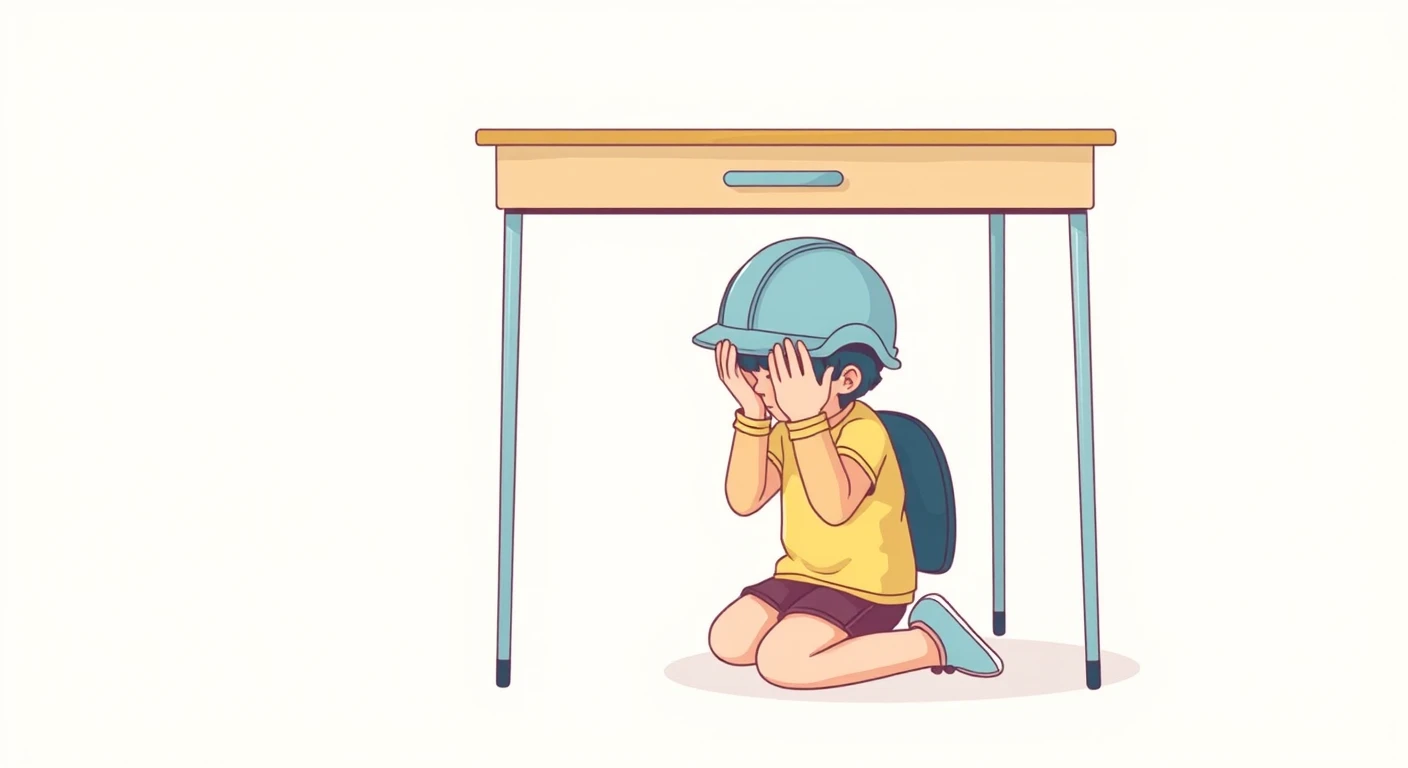
- Where there are desks, such as a classroom: get under a desk
- Where there are no desks: get under something that protects against falling objects, such as a chair
- Where there is nothing to shelter under: move to a spot where nothing will fall, topple or slide, keep low, and cover your head with a bag or something similar
For drills in the classroom, it lists the action "get under the desk and hold the desk legs firmly". It also says that rushing outside in a panic from a building that has been made earthquake-resistant is, if anything, more dangerous.
Check the action in the picture against these basics
When choosing a picture for an earthquake drill, look at these points in order.
- Are they getting low? A picture of someone still sitting at a desk is no model for the drill
- Is the head protected? Are they under the desk, or covering their head with their arms or a bag?
- Is anyone running while the ground is shaking? Children dashing outside is exactly the action the MEXT guide calls dangerous
- Where are the hands? At schools that teach children to hold the desk legs, this is where the picture most easily disagrees with the lesson
Add what the picture lacks in the text
A picture that exactly matches the action your school teaches is hard to find. Rather than keep searching, it is more reliable to make the text fit. Describe the action shown in the picture first, then add what the picture lacks in the next sentence. Put the missing action in the first sentence instead, and children are left unsure whether to follow the words or the picture.
Evacuation Drill Notice
When the shaking starts, get under your desk and hold the desk legs firmly.
Evacuation Drill Notice
When the shaking starts, get under your desk and protect your head. Once you are under it, hold the desk legs firmly.
In a fire: cover your mouth and nose, and stay low
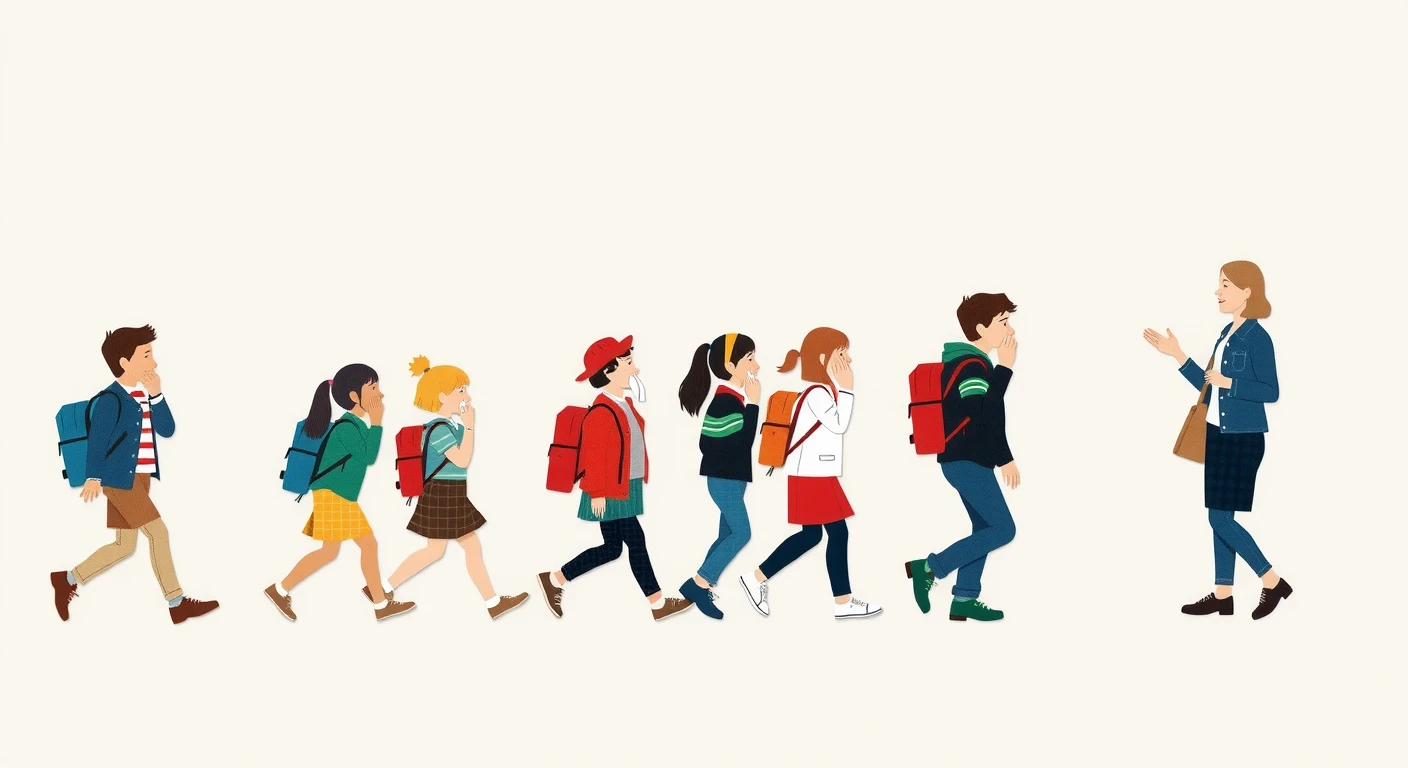
For fires, the disaster and crisis management e-learning site run by Japan's Fire and Disaster Management Agency advises staying as low as possible when escaping through smoke, covering your mouth with a towel or handkerchief so you do not breathe the smoke in, and using the evacuation stairs rather than the lift. The Tokyo Fire Department likewise explains that you should cover your mouth and nose with a handkerchief, towel or similar, and escape low, beneath the smoke.
In a fire drill picture, check whether mouths and noses are covered, whether the children are in a line, and — if the notice explains getting beneath the smoke — whether they are staying low.
Do not make it "under the desk in the classroom" every time
The MEXT guide points out that drills tend to be held at the same time every year, and calls for varying when and where the simulated earthquake happens — during breaks, during cleaning time, on the way to and from school, and so on. It also says drills are needed that assume the class teacher's instructions cannot reach the children.
If every notice shows "under the desk in the classroom", that is where readers' expectations settle too. For a drill set during break or cleaning time, choose a picture close to that scene, or one that works anywhere — a picture showing nothing but the head-protecting posture.
For supplies and preparations, a picture of objects is enough
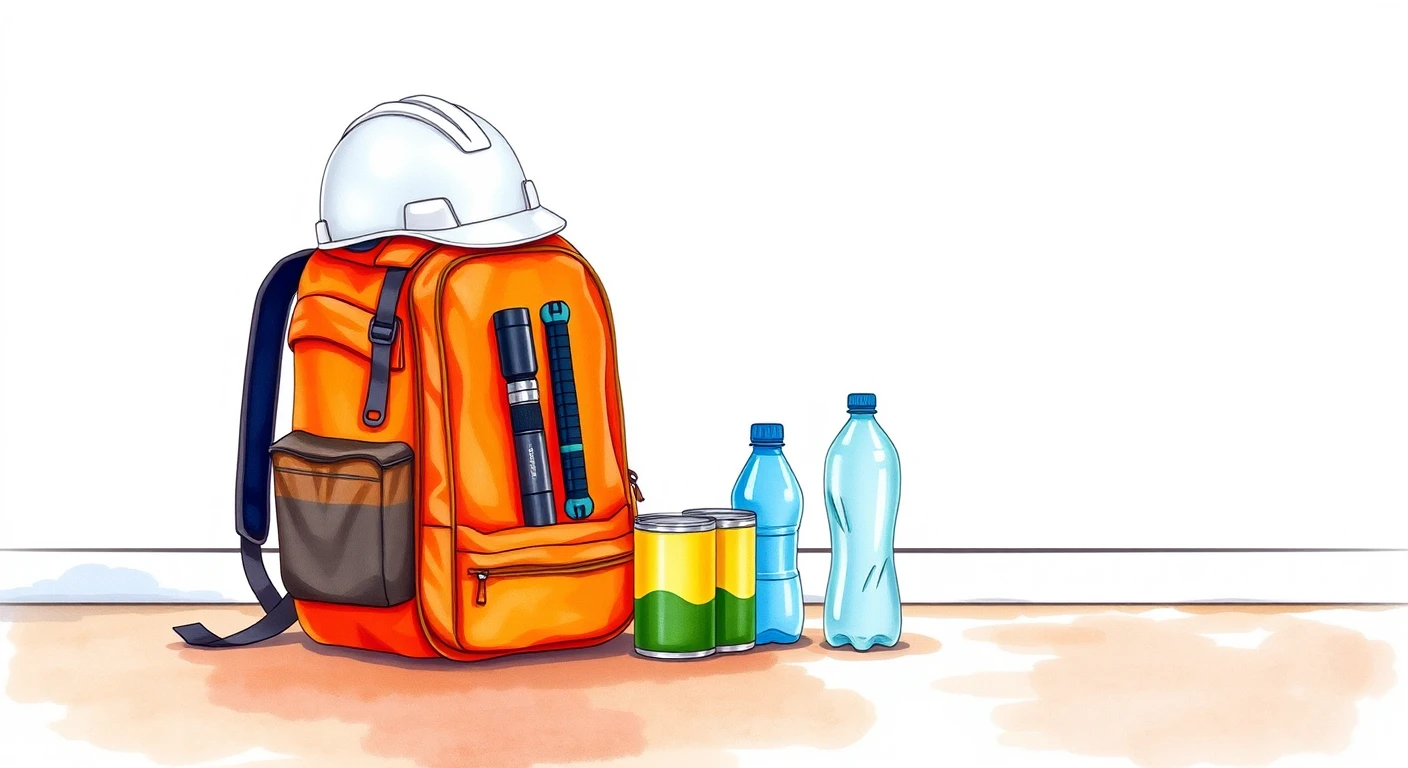
Topics that involve no human action, such as preparing emergency supplies or what to bring to a handover drill (where children are collected by their guardians), come across better in a picture of objects alone. With no people in it, there is no action to disagree with the text.
Sources
- Ministry of Education, Culture, Sports, Science and Technology (Japan): Guide for writing school disaster manuals (earthquakes and tsunamis) (in Japanese)
- Fire and Disaster Management Agency (Japan), disaster and crisis management e-college: Evacuating from a fire (in Japanese)
- Tokyo Fire Department, online learning room: How to evacuate (in Japanese)
Evacuation procedures vary with a school's location and the structure of its buildings. Match the content of your notice to your own school's disaster manual.