
Worksheets for cooking lessons in home economics often carry a cheerful illustration. For setting the mood, that is all it needs to do. Put the same picture next to the instructions on getting ready, though, and its meaning changes. Children look at the picture before the text, so a picture of someone working at the pot with their hair down is taken as a model that says "this is fine".
What to cover when getting ready
A hygiene and safety guidebook for cooking lessons in elementary school home economics rooms, compiled by a study group at Tokyo Gakugei University in Japan, explains that the purpose of getting ready is to keep bacteria and the like on your body and clothes from reaching the food. It then lists the following points.
- An apron with a bib, tied at the back. Avoid the kind tied at the front, which risks catching fire
- A head scarf (a triangular cloth that covers the hair), with all the hair tucked inside, fringe included. Long hair should be tied back
- Sleeves rolled up
- A mask is preferable
- Nails cut short. If you have an injury on your hand, wear disposable gloves
The same guidebook says that among accidents during cooking, cutting a finger with a knife is common, with burns next. It also says that during the lesson, knives should be placed in the middle of the chopping board or on a tray, with the handle not sticking out over the edge of the worktop.
What to check in the picture
For a picture that goes with the instructions on getting ready, check these points.
- Hair: Is it hanging loose? Is it covered by a head scarf or a cap?
- Apron: Does it have a bib? Whether it ties at the back often cannot be seen in a picture drawn from the front
- Sleeves: Are long sleeves left hanging down over the wrists?
- Knife: If one is shown, does the blade or the handle stick out over the edge of the worktop?
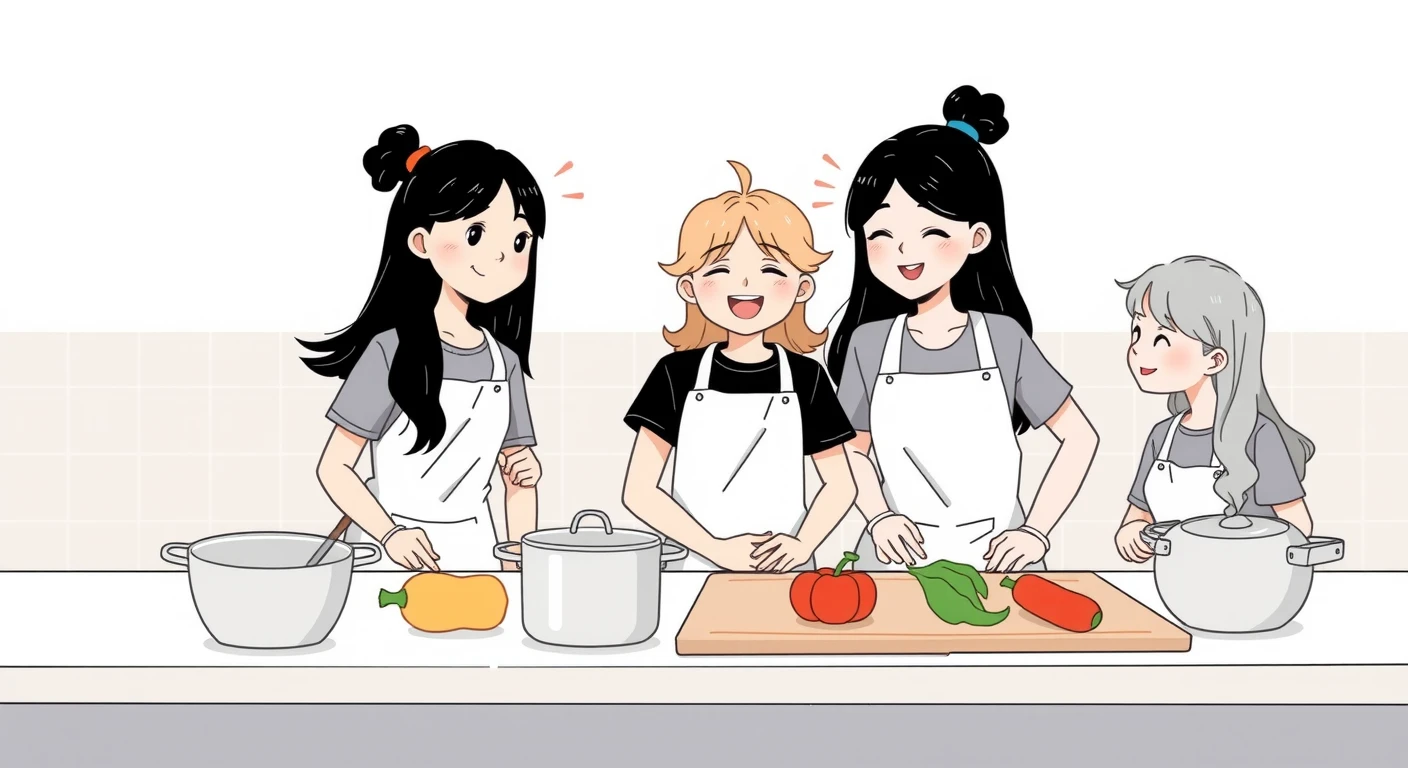
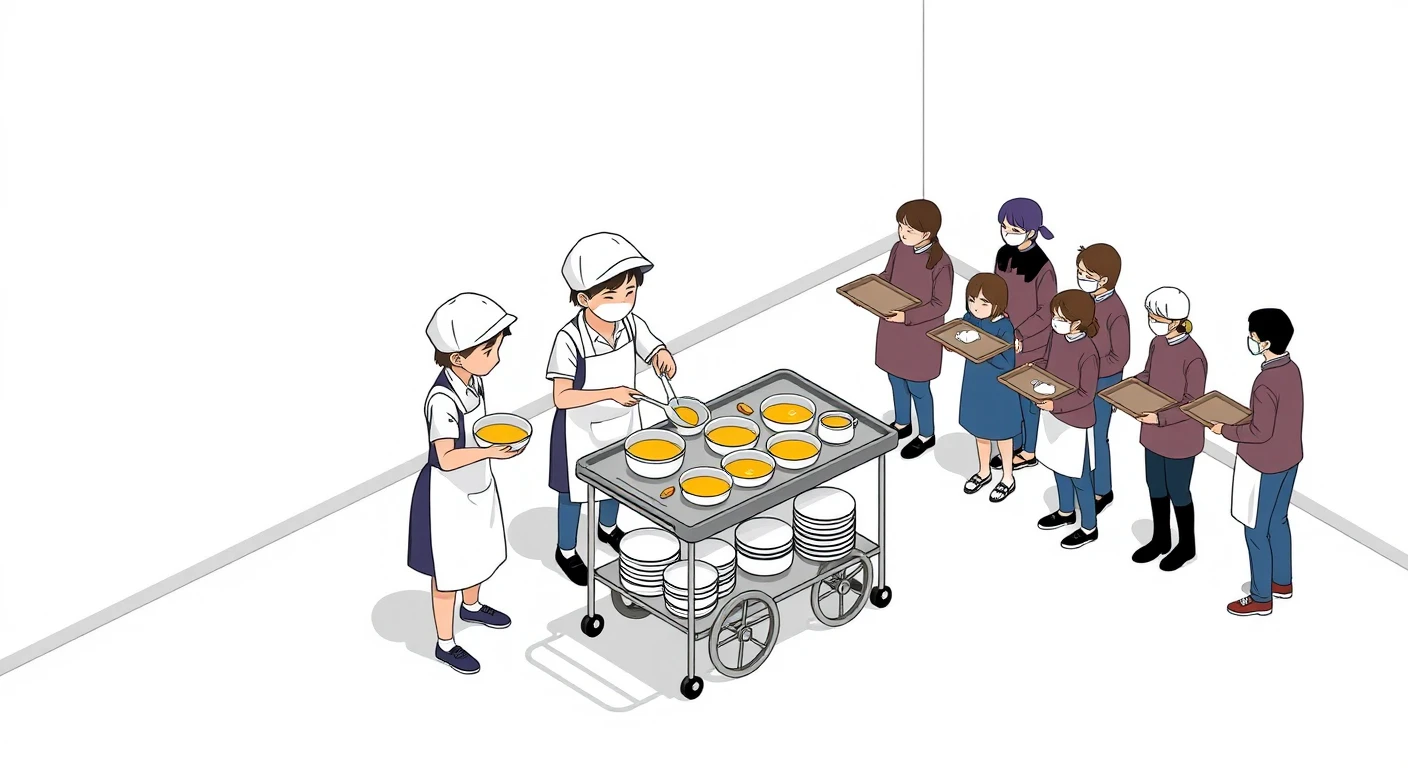
Keep mood pictures and model pictures apart
Ask one picture to carry both "this looks fun" and "this is the right way to get ready", and one of the two gives way. Choosing becomes easier if you think of the worksheet as two areas.
- Around the heading: next to the name of the dish and the date. Conveying fun or the season is enough, and the picture does not need to show anyone properly dressed
- The getting-ready and steps sections: whatever action is drawn becomes the model. If no picture meets the criteria, leave the picture out and use a written checklist instead
Leaving the picture out is not cutting corners. A checklist confuses children less than a picture that does not meet the criteria.
Cooking Lesson: Rice and Miso Soup
Getting-ready checklist
- □ Apron with a bib, strings tied at the back
- □ Fringe tucked into head scarf (long hair tied back)
- □ Sleeves rolled up
- □ Nails cut short before the lesson
- □ Hands washed with soap
Steps
If the worksheet also tells families what to bring
If the worksheet doubles as a note to families about what to bring, list a towel or handkerchief for drying hands alongside the apron, head scarf and mask. The guidebook notes that bacteria multiply easily on damp towels and handkerchiefs, and says children should bring a dry one for drying their hands, set aside for the cooking lesson.
Sources
Rules on getting ready can differ from school to school. Match the worksheet to your own school's guidance.